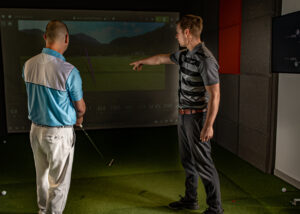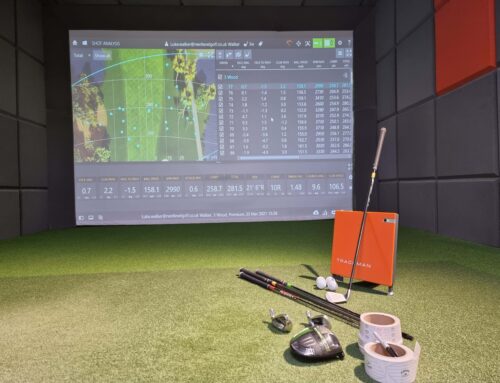
Modern golf coaching is no longer based on guesswork alone. Thanks to industry-leading Trackman 4 technology at Next Level Golf, golfers can now understand exactly what happens during every swing and every shot.
From ball speed and launch angle to club path and face angle, Trackman provides real-time data that allows players and coaches to identify strengths, expose inefficiencies, and create measurable improvement.

At Next Level Golf, we use this data every day to help golfers of all abilities improve performance, gain distance, tighten dispersion, and build consistency. So, what exactly do we track – and why does it matter?
Why Tracking Data Matters in Golf
Every golf shot is influenced by a combination of club delivery, strike quality, launch conditions, and ball flight characteristics. Without accurate data, golfers often rely on feel alone – and feel can be misleading.
Trackman 4 allows us to:
- Measure swing and ball flight data with incredible precision
- Compare ‘feel vs real’
- Identify exactly why shots behave the way they do
- Monitor swing changes over time
- Build personalised coaching plans based on facts, not assumptions
Trackman displays 26 impact and ball flight parameters in real time, giving golfers immediate, understandable feedback after every shot.
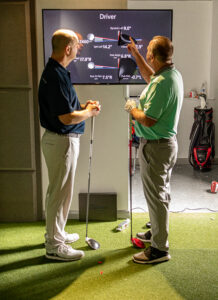
Smash Factor – Are You Maximising Your Energy Transfer?
One of the most important numbers in golf performance is Smash Factor. Smash Factor measures how efficiently energy is transferred from the club head into the golf ball. It is calculated by: Ball Speed ÷ Club Speed. A higher smash factor means a more efficient strike.

Typical Smash Factor Benchmarks
- Driver: approximately 1.50
- Pitching wedge: approximately 1.25
For example:
- Golfer A swings at 100mph and produces a smash factor of 1.40 = 140mph ball speed
- Golfer B swings at 100mph and produces a smash factor of 1.50 = 150mph ball speed
That 10mph increase in ball speed can result in approximately 20 extra yards of distance – despite both golfers swinging at the same speed.
This is why centred strike and quality of contact are so important.
Ball Speed – The Biggest Distance Factor
Ball Speed is the speed of the golf ball immediately after impact. While club speed creates potential distance, ball speed is what actually delivers it.

Ball speed is influenced by:
- Club speed
- Strike location
- Club face contact
- Club delivery
- Face-to-path relationship
Off-centre strikes from the heel or toe reduce efficiency and cost valuable distance.
As a rule of thumb: An increase of 1mph in ball speed can add up to 2 yards of driver distance.
Club Speed – Your Distance Potential
Club Speed measures how fast the club head is travelling just before impact. More speed generally means more potential distance.
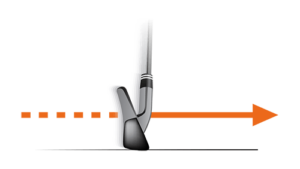
Trackman helps us accurately measure club speed and understand whether golfers are getting the most from their swing mechanics and equipment.
In many cases, golfers can gain distance not simply by swinging harder, but by improving efficiency and strike quality.
Even small increases matter: Adding 1mph of club speed can increase driver distance by approximately 2–3 yards when launch conditions are optimised.
Launch Angle – Finding the Perfect Window
Launch Angle is the angle at which the ball leaves the club face relative to the ground. Launch angle works together with Ball Speed, Spin Rate and Dynamic Loft, to determine carry distance, peak height and overall trajectory.
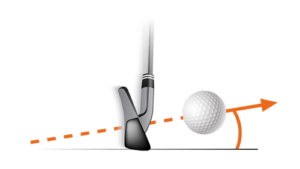
Every golfer has an optimal launch window depending on their swing speed and delivery characteristics:
- Too low, and the ball won’t stay in the air long enough
- Too high, and the shot can lose efficiency and distance
Trackman allows us to fine-tune launch conditions for maximum performance.
Spin Rate – One of the Most Important Numbers in Golf
Spin Rate refers to the amount of spin placed on the golf ball immediately after impact. Spin has a huge effect on distance, height, shot control and performance in windy conditions.
Too much spin can rob distance and cause the ball to balloon, particularly into the wind. Too little spin can make shots difficult to control.

Generally:
- More loft creates more spin
- More club speed can increase spin
- Lower lofted clubs reduce spin
Understanding and optimising spin is a major part of improving ball flight consistency.
Carry Distance – The Number That Really Matters
Many golfers focus purely on total distance, but Carry Distance is often the more useful number. Carry is the distance the ball travels through the air before landing. Trackman measures carry accurately using radar tracking technology and standardises the measurement to a level landing area.
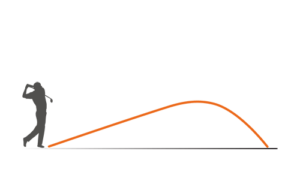
Knowing your true carry distances is essential for:
- Better club selection
- Improved distance control
- Smarter course management
- More consistent scoring
Elite players are incredibly precise with carry numbers – and now everyday golfers can be too.
Dynamic Loft – Controlling Ball Flight
Dynamic Loft is the amount of loft presented on the club face at impact. It is influenced by shaft lean, release pattern, Attack Angle, face position and strike location. Dynamic loft plays a major role in determining Launch Angle, Spin Rate, Trajectory and Carry distance.

Too much dynamic loft can launch the ball excessively high with too much spin.
Too little can create low, ineffective ball flights.
Trackman allows coaches to see exactly how the club is being delivered at impact.
Attack Angle – Hitting Up or Down on the Ball
Attack Angle measures whether the club head is travelling upward or downward at impact. Typically, iron shots are struck with a negative attack angle, while driver shots often benefit from a positive attack angle.
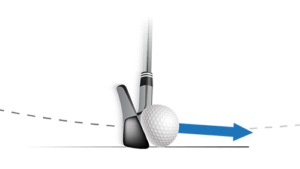
A positive attack angle with the driver can help:
- Increase launch
- Reduce spin
- Improve carry distance
However, achieving the right balance between attack angle, loft, and strike quality is crucial.
Club Path – Understanding Shot Shape
Club Path describes the direction the club head is moving relative to the target line at impact. For right-handed golfers, a positive path is ‘in-to-out’ and a negative path is ‘out-to-in’.

Club path influences:
- Shot curvature
- Ball start direction
- Draw and fade shape
Different shot patterns require different club paths.
Trackman allows golfers to finally understand why the ball curves the way it does.
Face Angle – The Key to Accuracy
Face Angle measures where the club face is pointing at impact. This is the single most important factor influencing the ball’s starting direction. For right-handed golfers, a positive face angle is an open face, and a negative face angle is a closed face.
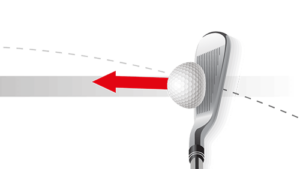
Understanding face angle helps golfers:
- Improve accuracy
- Eliminate slices and hooks
- Control shot shape
- Build consistency under pressure
Trackman makes these relationships easy to understand through real-time visual feedback.
Real-Time Feedback Creates Faster Improvement
At Next Level Golf, we combine Trackman data with high-speed video analysis to provide instant visual feedback. Golfers can see what happened, why it happened and how to improve it.
Golfers can see:
- What happened
- Why it happened
- How to improve it

This creates a far more effective learning environment than relying on feel alone. Our Trackman-certified PGA professionals use this information to deliver tailored coaching and development programmes designed around each individual golfer.
Ready to Understand Your Game Like Never Before?
Whether you want more distance, tighter dispersion, improved consistency, or simply a better understanding of your swing, Trackman 4 gives you the insights needed to improve faster and smarter.
Visit Next Level Golf and discover how data-driven coaching can help you truly unleash your potential.
Book your assessment today and let us show you what your numbers really mean.